
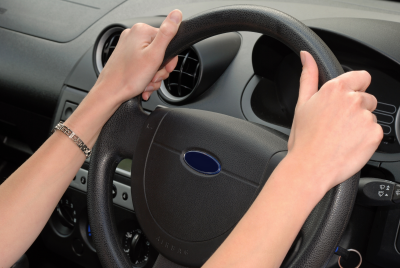
 If you are looking for personal development and a deeper understanding of the driving task coupled with an enhanced set of skills, perhaps because you want to become a driving instructor, or because you want to keep your family safer on the road, consider the information below and decide how each test might be of benefit to you.
Here are a few reasons for taking advanced driving tests:
There are various organisations that offer advanced driving tests. The most popular are briefly described below.
 The stated aim of the Institute of Advanced Motorists is to raise public awareness of road safety and of good driving methods.
The organisation runs a number of local groups to help drivers to prepare for the test. Members and associate members of the groups can have their driving observed and assessed by a special group of 'Observers'.
This is an excellent way to meet people with an interest in driving and to broaden your driving knowledge. Passing the IAM test is of little practical value in itself although you might gain a better insurance deal.
The Institute's main aim is to improve road safety standards, thus making the roads safer for everyone. Because of this they get as many people as possible up to an 'acceptable' safety standard, rather than getting an elite few up to 'very advanced' level.
Further experience of having your driving scrutinised can be gained on observed runs with local groups. These runs can be especially useful when it comes to ironing out bad habits.
 RoSPA
RoSPA The aims of the RoSPA Advanced Drivers Association driving test are much the same as the IAM. There are some local groups but the network is smaller than the IAM.
The RoSPA test is graded. The lowest grade approximates to the standard required for a good 'L' pass, the highest is nearer to the standard required by the Driving Standards Agency (DSA) for driving test examiners (Cardington).
The driving style preferred by RoSPA differs slightly from that required by the DSA. In particular they tend to prefer the Roadcraft (Police Driving Manual) method of road positioning for left hand bends.
Practicing both DSA and RoSPA styles of driving and studying 'Roadcraft' can develop your flexibility as a driver.
Web: http://www.rospa.com/drivertraining/courses/advanced_tests/car.htm
 The DIAmond Advanced test
Administered by the Driving Instructor's Association of Great Britain (DIA), this test qualifies you as a DIAmond Master Driver.
The examiners are driving instructors who have received special training from the DIA.
The DIA test is structured in the same way as the DSA driving instructors driving test and is marked to a similar standard.
If you are thinking of becoming a driving instructor, or are already undergoing driving instructor training and want an in dependant 'mock test' the DIA test is probably a good starting point because of the similarities with the DSA driving test and the fact that you will be tested by a working driving instructor who may offer valuable advice.
 Cardington (Bedfordshire) is the location of the DSA's examiner training establishment. This test is only available in-house for the Driving Standards Agency or to professional driving instructors.
As part of their training, examiners have to undergo a demanding driving test. This test is available to all existing driving instructors (you will not be eligible unless you are a fully qualified driving instructor).
The test is similar to driving instructors' driving examination but requires a higher driving standard with only three driving faults (as opposed to six in Part-Two) being allowed in a drive of over one hour.
It is worth noting that all DSA (L Test) driving test examiners will have taken this exacting test on more that one occasion and so they are well placed to assess the standard of new drivers.