
Home / Drivers / UK speed limits

Built up areas

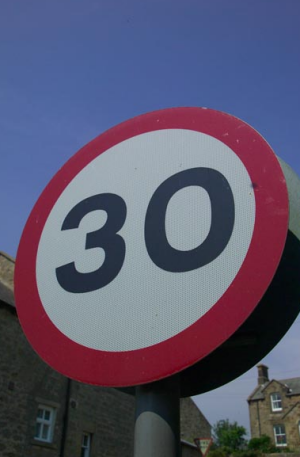
In most built up areas, towns and villages, etc., the speed limit is 30 mph. Effectively this speed limit is in force wherever there are lamp posts (with a few exceptions determined by the spacing of the lamp posts).

Where the speed limit exceeds 30 mph, there will be 'repeater' signs reminding you of the higher limit.

In some villages there will be no street lighting - hence no lamp posts. In these situations the 30 mph speed limit will be posted with regular repeater signs,

Accident statistics show that at 40 mph nine out of ten children hit by cars either die or receive life changing serious injuries. At 20 mph nine out of ten survive.

You will probably remain uninjured when you hit and kill a child - at least physically - but the memory will stay with you.

Did you know?

A five mile cross-town journey at an average of 28 mph will take about 10 minutes, an average of 40 mph only saves you a couple of minutes.

Most cross-town journeys are far less than five miles!

In reality, in most towns and cities - you are unlikely to average anywhere near 28 mph during daytime traffic unless you break the speed limits for dangerous short bursts- if you are in a hurry, get a bike!

Wise up!

Speed camera van in actionThere's nothing wrong with speed - it often gets you there quicker on fast roads and can be fun. The problem is with inappropriate speed.

Wise up! Go a bit quicker on the safe bits of road and slow down in towns - your average journey time will be the same, you will be more relaxed, and the kids on the street will enjoy more birthdays!

If you must kill something - kill your speed in town.

UK speed limits

All speed limits are in miles per hour and apply as stated unless road signs show otherwise

 
Built-up
Areas
Single Carriageways
Dual
Carriageways
Motorways
Cars and motorcycles
(including car derived vans up to 2 tonnes maximum laden weight
30
60
70
70
Cars towing caravans or trailers
(including car derived vans and motorcycles)
30
50
60
60
Buses and coaches
(not exceeding 12 metres in overall length)
30
50
60
70
Goods vehicles
(not exceeding 7.5 tonnes maximum laden weight). Note: This includes vans that are not 'car derived'
30
50
60
70
Goods vehicles
(exceeding 7.5 tonnes maximum laden weight)
30
40
50
60

Note: Heavy vehicles

From 2008, the practical speed limits for goods vehicles and buses on UK motorways will become 90 km/h and 100 km/h respectively. This equates to approximately 56 mph and 62 mph. This is because of new speed limiter regulations which commence in January.

From 1 January 2008, all goods vehicles and buses, registered since 2005, and many older vehicles, will be required to be fitted with speed limiters, in addition to those that have been required to do so for some years, such as goods vehicles that travel internationally.

This means that the official motorway speed limits of 60 mph and 70 mph for these vehicles, as shown in the Highway Code , will effectively be superseded; though some older goods vehicles will remain unaffected by the change.

VOSA leflet available here


Van Drivers ...

Many van drivers get caught out because they do not know the law. Make sure you know the national speed limits that your vehicle is restricted to

  • If your van has a maximum laden weight (Gross Vehicle Weight) of over 2 tonnes (2000kg) then you are restricted to lower speed limits on single carriageways and dual carriageways.

  • If your van or goods vehicle has a maximum laden weight (Gross Vehicle Weight) of over 7.5 tonnes (7500kg) you are also restricted to lower speed limits on motorways

Below are some examples of speed limits for vans, however, you should check the Gross Vehicle Weight and “plated” weight of your van/goods vehicle.

Vans

Type of vehicle

Built-up area Single carriageway Dual carriageway Motorway
Transit Type Van 30 50 60 70*
Luton Type Van 30 50 60 70*
Astra Type Van 30 60 70 70   

Motorway note: *60 if articulated or towing a trailer.

More about limits at: http://ukspeedlimits.com/