
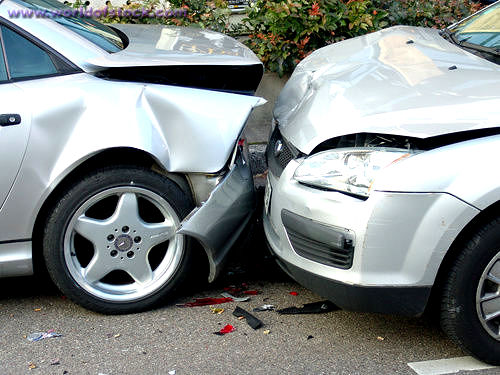
 It just might be that one day you are the first, or only, person to arrive at the scene of an accident, or you may be involved in an accident but uninjured. Would you know what to do?
The advice on this page is basic, simple, and can save lives. You will also find a couple of videos from the UK Open University explaining what paramedics do at the scene of an accident.
1. Warn others:
Park your car with hazard lights and/or headlights on ideally facing approaching traffic. Place a warning triangle in the road.
If there are other people who can help send them back along the road to wave traffic in order to slow it down. Take care on fast moving roads ... Other drivers might not understand what you are trying to do.
Although warning others might take precious minutes it will help prevent further danger and reduce the risk for you and all involved.
2. Further reduce risks and get help
Check the scene, switch off engines, impose a no smoking ban. Keep children at a safe distance.
Send someone for help or use your mobile phone. The UK emergency number is 999 (or 112 on a mobile. Call 911 in the USA.)
Click here for a list of worldwide emergency numbers. Dial the emergency number and when the operator answers, state the service required.
Give the following information:
Your telephone number (if you are cut off the emergency service will be able to contact you)
The location of the incident: Road names or numbers, landmarks, map reference, sat-nav positioning reference, etc.
Description of the incident, for example, "Motorcycle has hit a bus - the motorcyclist is not moving"
3. Assess casualties/injuries
The quiet casualties are probably the worst injured. Reassure the noisy ones that help is on the way.
4. Simple first aid:
After completing the tasks above you can help those who need attention.
Don't move casualties: You may cause further injury. The only exception would be if there was further imminent risk and danger to life, for example fire.
Check for breathing: If the casualty is not breathing, clear the mouth (false teeth, chewing gum, sweets) very gently tilt the head back and, holding their nose, gently blow into them at five second intervals allowing the chest to exhale naturally. See the links below for detailed information and methods.
Stop bleeding: Firm pressure on a wound will stem bleeding.
Don't give casualties anything to eat or drink: This can cause complications for medics and delay life saving treatment.
Learn more:
Note that the information above is a very bare minimum. There are also different schools of thought on best practice - with modern thinking being that a 'hands only' chest compression method works just as well as mouth-to-mouth resuscitation.
Attend a first aid course to learn the basics of first-aid. It's easy to save lives with simple skills that can be learned in just a few hours.
Stay calm - stay safe!
The UK Highway Code, Rule 286, states:
If you are involved in a collision which causes damage or injury to any other person, vehicle, animal or property, you MUST
Stop - you must stop if you are involved in an accident.
Give your own and the vehicle owner's name and address, and the registration number of the vehicle, to anyone having reasonable grounds for requiring them
If you do not give your name and address at the time of the collision, report it to the police as soon as reasonably practicable, and in any case within 24 hours
For full information about breakdowns and accidents from the Highway Code click here.
The video below gives advice about action at the scene of an accident.