
 The first thing to remember about car fires is that they are fairly rare, even in accidents. However, if you have ever driven past one it will have probably left you with a vivid memory of the event.
The good news is that fires are not only rare, but manufacturers have minimised the risk. Modern car design puts the petrol tank in a position where it is unlikely to be damaged in all except the worst accidents.
The main cause of vehicle fire is faulty wiring. In turn this can easily come about because of neglect or sloppy do-it-yourself electrical repairs.
It is not wise to fit electrical accessories to your vehicle unless you are absolutely sure about what you are doing. The cost of a good auto-electrician will be far less than the problems that come with a car fire.
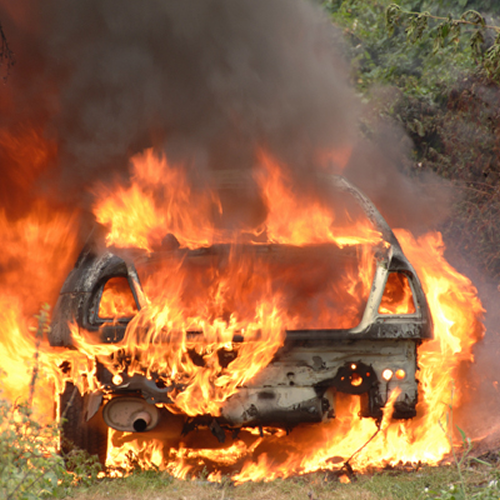
If you suspect a fire on the move you need to take prompt action - it only takes a few minutes for a fire to develop into an inferno like the one shown in the photo.
If the fire is inside the car, for example, smoke coming from behind the dashboard, stop immediately turn off the ignition and get out of the car as quickly as possible - there is a real danger that the car will quickly fill with highly toxic smoke and fumes.
If the fire is under the bonnet:
Fires, especially electrical fires, take hold very quickly. It is not normally a good idea to try and unpack your belongings from the boot, etc. If there is time, grab what you can, otherwise stand well away. Although petrol tanks are well protected from impact, they can explode in a fire. The tyres can also explode throwing off burning debris - so keep your distance!
Earth or sand is useful for putting out fires in the absence of an extinguisher. A car rug or mat might be useful for smothering a fire. Don't use water on petrol fires, you may wash the burning petrol somewhere where it will cause more problems.
Electrical fires can be stopped by disconnecting the battery or the appropriate wire. However, you should not attempt to do this unless you know what you are doing and can easily access the battery (or wire) without the risk of burns.
Always, always, always, get your passengers out of the car before doing anything else if you suspect fire.
As explained above, toxic fumes can fill the car very quickly. Make sure that passengers (especially children) and pets are well out of harm's way, especially on motorways and other fast roads. Other drivers will be distracted and 'secondary' accidents can easily happen.
Stay calm - stay safe!